

Read what God did this year in 2024 through Dirke & Lorna’s ministry because of your prayers and generosity!
Read what God did this year in 2024 through Dirke & Lorna’s ministry because of your prayers and generosity!

See what God has been doing, not only in Dirke & Lorna’s ministry but around the world. Plus, read about the hard transition Lorna is going through. Click here!

Read not only about what Dirke & Lorna have been doing this summer but the ministry impact of Cru around the world, including the Olympics.

In the development of people, the only thing I’ve found that is harder than giving good feedback, is receiving feedback well. For thirty years I’ve worked in Leader Development at all levels of a global Christian organization and I’ve found the longer someone fails to receive constructive criticism, the more difficult for them to receive it well when it does come. It’s one of the skills that takes intentional work and time, because it’s all about one’s sense of identity.
My phone rang and I was surprised to hear the voice of one of our staff who was living and ministering in another part of the world. Normally we would communicate by email so this call was unusual. “Is everything okay (I’ll call him Steve).” “Oh, yeah,” Steve said, “Everything is okay, but I want to give you a heads up. My supervisor just did a position focus review with me and my wife. I don’t think it’s good, so I want you to be aware.” Steve then described a confrontation and a number of poor interactions. He was convinced they would write negative things in the review. Their comments from his perspective stemmed more because of their poor relationship, and not their actual ministry work. So, he wanted me to be aware and not judge them.
Over the years, conversations like Steve’s have become commonplace. We constantly train our supervisors to give constructive feedback and that is important, but I would often notice it didn’t matter how the feedback was given, good or bad, our staff members struggled to receive it, especially if the staff member was older and in a higher level of the organization. The younger staff seemed more eager to hear and apply, but it was less common as leaders climbed the organizational ladder to receive feedback well.
Several years ago, I heard Sheila Heen (Harvard Negotiation Project from Harvard School of Law), do a TED Talk on “Wrong Spotting,” and the nickel dropped for me. * She put words to what I had witnessed for years. She pointed to studies done for the past twenty years showing it’s not how to give feedback where the most training is needed, but just the opposite, how to receive feedback.

At the heart of NOT receiving feedback is the practice of “WRONG SPOTTING.” If I can find something wrong with the person who is suggesting some type of change, then I feel the freedom to dismiss the feedback. However, the faulty flaw in that thinking is that I’m not hearing and assessing the feedback, but rather, I’m judging the conveyor of the feedback. Therefore, I entirely miss the golden nugget (even if it’s just 5% true). I feel justified in my dismissal, but I walk away just as ignorant.
There’s a common saying, “You’ll learn more from your enemies than you ever will from your friends.” It’s not that we are looking for enemies, but the point is that those who are not seeking to be our long-term friends usually feel more the freedom to share what they observe and tend not to sugarcoat their thoughts. Our good friends often minimize their critique for the sake of the relationship.
Yes, I know that people’s perceptions and critiques can be skewed and that not all criticism is justified. However, my experience is that we (myself included) can quickly dismiss feedback before it’s accurately evaluated and assessed. There is usually a kernel of truth in all feedback. Heen says we usually dismiss feedback when we are triggered in three ways (Truth, Relationship or Identity).**
Truth triggers are when we hear something that we immediately believe is inaccurate. It is not how we see ourselves. Maybe they say “you don’t listen well.” But I know I have received numerous compliments from people as to how well I listen. So, the moment I hear it, I dismiss it. However, if I don’t say, “tell me more,” I may not find out that what they really mean. It may not be that “I don’t listen.” But rather, it may mean that when I have a determined plan I’m committed to, I don’t slow down or make changes. If I don’t ask that second question, “tell me more,” I would have missed a valuable truth.
Relationship triggers are when we dismiss feedback because of “who” gives it. Maybe it’s my spouse and I chalk it up to them being picky or never happy with me. Or, it might be like Steve in my opening example. Interestingly, everything the supervisor wrote in the position review for the couple was accurate. Therefore, you may not find it surprising that the couple left our organization two years later. Not because they were not developed, but because they were unwilling to hear truth and be developed.
Identity triggers are usually the culprit when we are unwilling to receive feedback. This is especially true for seasoned ministry leaders who have had a degree of success. Whether that feedback comes way of a survey from a team, or larger group of workers, or via individual conversations. It’s a red flag when a ministry leader does not ask, “Tell me more.” Instead, they will tell you why this group of people said what they said, or why that other person said what they said. They always have an “out-clause” and an explanation that excuses them from the critique.
Identity issues are extremely hard because they speak to the core of who we are and how we see ourselves. For some, if they admit they need to improve or get better, it feels like they are admitting they are a failure or have not led well. To acknowledge, “your right, that wasn’t a good decision,” feels like they are weak, and they fear people will not trust them. But what they fail to see is that everyone around them can see their weaknesses and poor decisions. To not take ownership is what destroys trust. Trust will be built when we accept criticism, ask for forgiveness if needed, and make changes. Those are the actions of a good, self-aware leader that engenders trust.
Solomon in the book of Proverbs writes:
Listen to advice and accept instruction, that you may gain wisdom in the future. (19:20)
Whoever loves discipline loves knowledge, but he who hates reproof is stupid. (12:1)
The ear that listens to life-giving reproof will dwell among the wise. Whoever ignores instruction despises himself, but he who listens to reproof gains intelligence. The fear of the Lord is instruction in wisdom, and humility comes before honor. (15:31-33)
The way of a fool is right in his own eyes, but a wise man listens to advice. (12:15)
 Receiving feedback is hard because it sits in the crossroads of two paths. One path is where we want to learn and grow as a leader and person. The other path is a deep-seated desire to be accepted and respected as we currently are (without making changes). The only way we can make receiving feedback easier is to intentionally set out to embrace who we are in the Lord (strengths and weaknesses). To acknowledge I’m not a finished product and I’m still under construction. My identity is who I am in Christ, not what are my ministry results or what is my ministry reputation.
Reputation is who people think we are, character is who God knows you are. We need to spend the bulk of our time developing our character, and our reputation will take care of itself. Jesus had little interest in what his reputation was. Jesus said, “I have come down from heaven, not to do my will, but the will of the Father.” (John 6:38).
ACTION STEP: Ask someone, what is one thing I could change in our relationship? In this role? In this task? In how I engage with this team? Be specific when you ask, and be ready to hear more than one thing. And be ready to use that magical three-word response: “tell me more.” After you have written down what they said, say THANK YOU! And then go to your prayer closet and ask the Lord, what do I need to see, understand and apply? If you’re honest, He will show you!
* Sheila Heen, How to Use Others’ Feedback to Grow and Learn, TEDx Talks, June 22, 2015
** Sheila Heen & Douglas Stone, Thanks for the Feedback, Penguin Books (2015).
posted July 15, 2024 by Dirke Johnson
 Dirke Johnson has a doctorate in Church Leadership and is a professor for the Ministry Degree program at Palm Beach Atlantic University. He works with Cru’s Global Theological Development as part of the Int’l Leadership Consortium. He specializes in Leader Development, creating high performing teams. He has years of experience at ministering in urban cross-cultural and international contexts.


On July 4th, all across America fireworks will be shooting off, picnics and family gatherings will be celebrating America, “the land of the free and the home of the brave.” We acknowledge what our forefathers fought for and the adoption of the Declaration of Independence on July 4th, 1776, which declared the original colonies to be free from British rule. However, it wasn’t until 1783 when America actually was free from British rule and the American Revolution came to an end.
The vote by the 2nd Continental Congress (which formed after the start of the Revolutionary War in 1775) was taken on July 2nd. That vote prompted John Adams to write to his wife, Abigail:
The second day of July 1776, will be the most memorable epoch in the history of America. I am apt to believe that it will be celebrated by succeeding generations as the great anniversary festival. It ought to be commemorated as the day of deliverance, by solemn acts of devotion to God Almighty. It ought to be solemnized with pomp and parade, with shows, games, sports, guns, bells, bonfires, and illuminations, from one end of this continent to the other, from this time forward forever more.
How true John Adams was in so many ways. It certainly has become a National Day of Celebration. And, rightfully so. There are many things that we can be proud of for our country and its accomplishments. Almost all countries have an independence or liberation day. I counted 178 countries with such a day and I most likely missed a few in my tabulation. All of them have reason to be proud. But, like all nations, there are things that we are not so proud of and wish were different.
The United States may have gained its independence on July 4th, 1776, but it wasn’t until June 19th, 1865, that true liberation was felt within the United States of America by all. On this day, the last enslaved people gained their freedom after federal troops arrived in Texas to enforce the decree that all slaves be freed. That day is now known as Juneteenth. That day is a symbol of liberation and freedom for all.
As significant as the 4th of July and Juneteenth is in recognizing independence and freedom, there is a much greater and more significant Independence Day!
Every nation’s liberation day pales in comparison. For every nation, as great as they may see themselves, and wish to be, when honest at their core, must acknowledge their ongoing human dependence and enslavement to self-centeredness. A proclivity for selfish ambition and greed. A natural tendency to enforce laws that protect some more than others; that benefit some more than others; to favor the “have’s” more than the “have-not’s.” It is a common thread in all countries that the complaints of some are heard and others are ignored. Wealth and riches are the holy grail in pursuit of personal happiness. Some countries may be better than others, but all are plagued with the same weaknesses and frailties.
As great as our human nations are, they all fall woefully short of a greater spiritual nation that demands a greater allegiance and humble submission of worship. John Adams alluded to this in his letter to his wife when he said this day of deliverance “should be commemorated by a solemn act of devotion to God.” Such a statement acknowledges that the devotion to almighty God stands above any human liberation, any creation of a human nation. Adams is not equating America as some are prone to do as to being God’s favored nation above all other nations. What Adams is acknowledging is for America to arrive at this place of independence in 1776 is an act of God and therefore God needs to be given devotion. This same sentiment should be said of all 178 nations who cheer on their day of liberation.
What is the greater Independence Day? The apostle Peter speaking to those who have said yes to Christ and the forgiveness God offered through Jesus’ sacrificial death, says in 1 Peter 2:9: “You are a chosen race, a royal priesthood, a holy nation, a people for God’s possession, so that you proclaim the excellencies of God.”
 What is this holy nation that Peter is referring to? The New Testament calls it “The Church.” In the Greek it is called the “ekklesia.” The church is not referring to a location of brick and mortar. It is not referring to a denomination like Catholic, Baptist, Presbyterian, etc. or to those who may be on the membership role of such human religious institutions. It is referring to the invisible and universal community of followers of Christ who are in both heaven and on earth. They are sometimes referred to as the “Community of the Redeemed.” They have been redeemed not by their good intentions or good deeds, but by the blood of Christ shed for them. They are not perfect, far from it, but the true “Ekklesia” is made up of true followers of Christ who proclaim:
“Jesus is Lord,” and believe in your heart that God raised him from the dead . . . 10 For it is with your heart that you believe and are justified, and it is with your mouth that you profess your faith and are saved. (Romans 10:9-10)
For the Community of the Redeemed, the 4th of July is a nice day to be given it’s due, but not to be revered, worshipped or given spiritual prominence. It has its place in the human economy of the world, but not in God’s economy. As James, the head of the church in Jerusalem so aptly writes in James 2, God is not a respecter of persons [nor human nations]. We are not to see anything we have achieved as somehow deserving favoritism from God (James 2:1).
All followers of Christ have the same real Independence Day no matter what country they were born in, or what ethnicity they represent. Similar to human independence days, sacrifices had to be made, blood had to be spent, the former owner and oppressor had to be thrown off and defeated. All of which is true for the Ekklesia, the true Church, the Community of the Redeemed.
Every Easter Sunday, spiritual Independence Day is celebrated around the world. The liberation battle was not fought and won by human hands, but by our Redeemer and Savior who fought and defeated the rulers, the authorities, and the powers of this dark world and the spiritual forces of evil in the heavenly realms. (Ephesians 6:12)

Easter is the day the Community of the Redeemed have been released from the power and chains of sin and the fear of death. Our spiritual forefathers in the first century saw this day of spiritual independence so important that they did not designate one day a year to celebrate. Rather, they began the practice of gathering the first day of every week (Sunday) to celebrate Easter. They celebrated the death, burial and resurrection of our Lord Jesus Christ. It was called the Lord’s Day (Acts 20:7; 1 Cor. 16:2; Mark 16:9,12,14; Luke 24:13-35). The Jews worshipped on Saturday (the Sabbath), but the “Church” quickly began worshipping the first day of every week (Sunday).
As we approach the 4th of July, it is appropriate to cheer and celebrate our nations Independence Day and the good things in our country while at the same time not dismissing where we need to be better. But, we must never practice syncretism by mixing the two Independence days. The Lord’s day was designed to celebrate our Spiritual Independence Day. When we gather for Sunday worship, we gather to lift up our Savior, and never to lift up our human-made nation. For our nation at times has been used by God, and at other times it has been used by Satan. On Sunday there is only one sacrifice that we lift up, one allegiance that we bow before, one Savior that we sing to and serve.
John Adams acknowledged the 1776 vote of independence was an act of God and therefore, it requires an act of devotion, thankful for our Almighty God’s intervention. But for the Church, the Community of the Redeemed, every day requires an act of devotion to our God no matter what nation we originate from. For it is our spiritual Independence Day that provides hope for the future and the true freedom for the human spirit!
July 3, 2024 by Dirke Johnson
Dirke Johnson has a doctorate in Church Leadership and is a professor for the Ministry Degree program at Palm Beach Atlantic University. He works with Cru’s Global Theological Development as part of the Int’l Leadership Consortium. He specializes in Leader Development, creating high performing teams. He has years of experience at ministering in urban cross- cultural and international contexts.

Check out Dirke & Lorna’s ministry trip to West Africa and see the Cape Coast Castles (the major ports for enslaved Africans who fueled the TransAtlantice Slave trade.
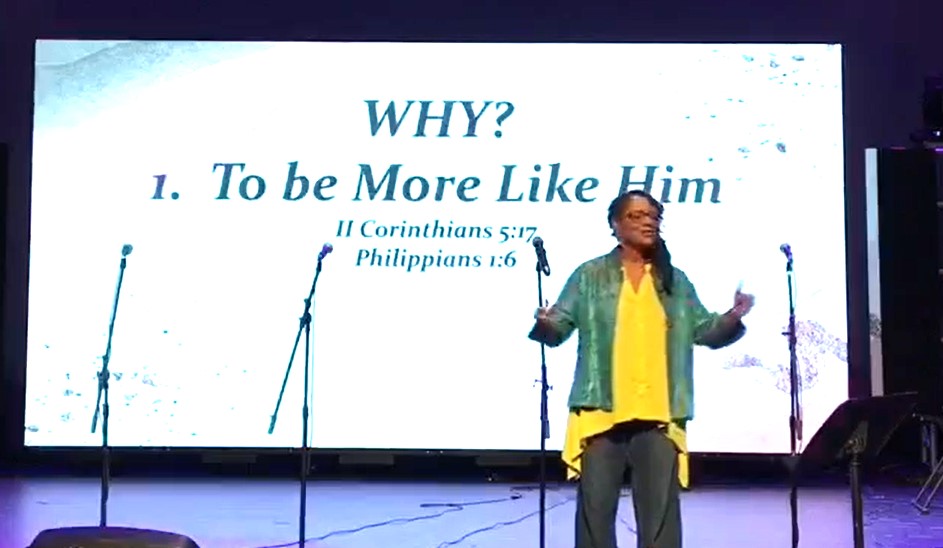
See how Lorna & Dirke are equipping a new generation to proclaim Jesus and be His hands and feet! Click here!
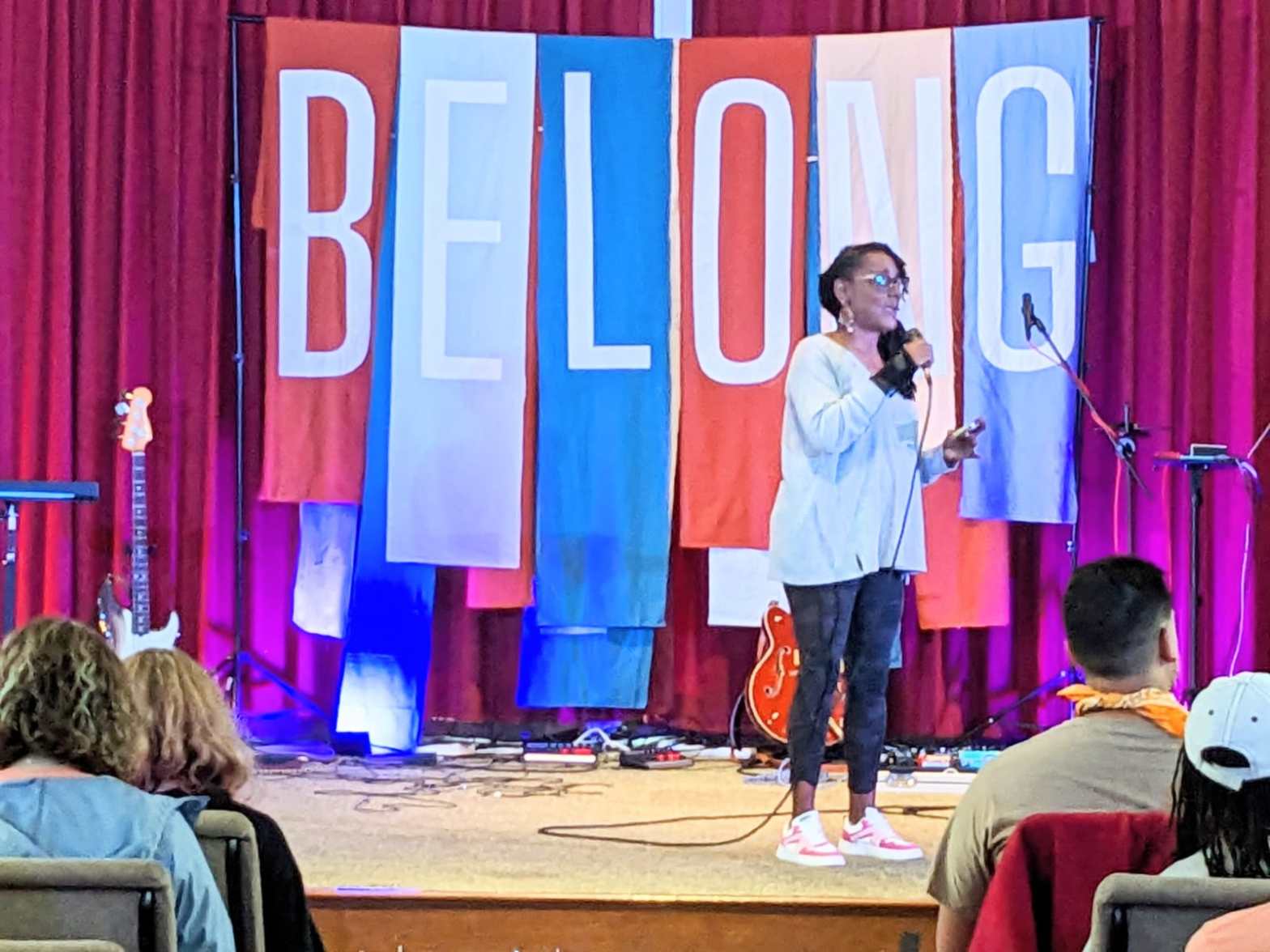
Click HERE to checkout the Fastbreak High School Conference that Lorna ministered at. Plus, hear how God worked at the SuperBowl and ministry in West Africa.

Check out Lorna’s fractured wrist, speaking at Fastbreak, how the Gospel continues to expand and family pictures from the Christmas holidays.

Check out one of Cru’s most impactful ministries and Dirke’s contribution to their success. See some of the new generation of missionaries that Lorna mentors.
Have a WordPress.com account? Log in now.

