

Did my parents make the right choice to raise us on Minneapolis’ North Side?
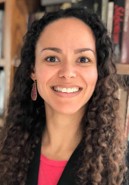
Guest contributor: Alyssa Miller / September 30, 2026
Journalist Nikole Hannah-Jones’ article about her decision to send her daughter to a low-income and mostly Black public school sparked public conversation. Here is my response by Alyssa Joy Miller
When I told a friend that my parents made a conscious decision to raise my sisters and me on the North Side of Minneapolis, her jaw dropped: “That’s crazy to me. I’ve never heard of that!” Her response mirrored the reactions Nikole Hannah-Jones has received in response to her recent essay in the New York Times (“In fighting for every Black child, did I betray my own?”, Sept. 20) about why she chose to send her daughter to a low-income and mostly Black public school in New York City.
I grew up on the North Side in the ’90s and early 2000s. The neighborhood held a vibrant Hmong community, a slice of white families, pockets of African immigrants and a spillover of Latino families from the South Side. But generally speaking, “North Side” was code for Black, poor and violent.
My parents, who married in Detroit in 1979, were among the first generation to have their interracial union legally recognized in the United States. They were not naive about racism and knew the world would see their daughters as Black women. When we moved to Minnesota, they deliberately chose the Blackest part of town, which correlated with some of the lower-performing schools in the state. They saw their parenting as an act of resistance — an idea that became an undercurrent of my life.
My mother led our neighborhood watch and served as a city council ambassador, regularly reporting drug and gang activity. Neighborhood kids called her Ms. Lorna, but a friend who got out of juvie revealed her inner-circle nickname: “Nosey Rosey.” Mom didn’t care. She gave me early permission to be Black without absorbing the harmful tropes of the environment. Coming from a lineage of accomplished Black leaders, living in the hood never defined her.
I attended Minneapolis Public Schools throughout my youth. Shout out to Loring Elementary School, Jenny Lind Elementary School, Northeast Middle School, Olson Middle School and the recently renamed Camden High School (formerly Patrick Henry High School). In line with Hannah-Jones’s experience, my mother remained hypervigilant about our education. School administrators certainly knew her name. After facing profound bullying at Northeast, I transferred to Olson. Northeast taught me that you can’t just talk any which way if you don’t throw hands. I was never much for hands.
Sundays and weeknights were spent at Zion Baptist Church, a beacon of Black prestige and civic leadership. My white father served on the pastoral team, and I was proud to be Rev. Johnson’s daughter.
I grew up with a Biblical concept of being in the world, but not of it. In a physical sense, this was true for me. I lived next door to poverty, abuse and crime, but didn’t experience them inside my home. Like Hannah-Jones’s daughter, I occasionally questioned my parents’ decision. I wanted to belong where I was — not change it, not stick out. Yet, that exposure built a distinct sense of purpose and resilience. Backed by a loving home and a foundation in public speaking from church, I thrived.
I got to DJ on the local jazz radio station 88.5. I was a teen reporter on KARE 11’s weekend show for teens. I would often be heard singing in Zion’s choir on Sunday mornings from KMOJ’s replay of the prior week’s service. I was recruited into a national community service program that flew me to Europe to learn civic duty practices. My mother, a former alternate for the 1972 U.S. Olympic team, volunteered as our track coach at Patrick Henry, guiding me to a state championship my senior year.
Nonetheless, I came into Howard University as a remedial math student. During my first semester, when my algebra professor looked over my failed assignments during office hours, he would ask me, “Where did you go to school?” I ended up taking his course twice. I’d never been happier to receive a C in my life.
Looking back, the “in it but not of it” mindset was occasionally disorienting, but it deeply invested my family in becoming lifelong changemakers. My older sister is a corporate People/Culture executive. My younger sister runs a natural Black hair salon in New York with a nonprofit mentorship arm. I work in publishing at HarperCollins championing stories from the Black diaspora, and I married an educator committed to public schools.
If the ultimate goal is raising global citizens committed to meaningful change, maybe Hannah-Jones — and my parents — were onto something all along.
 Alyssa Joy Miller is an author, poet and publishing professional exploring themes of faith, justice and race in America. She is the editor of the forthcoming anthology “Two or More Boxes” and lives in St. Paul.

