

|
Changing Lives in Changing Times
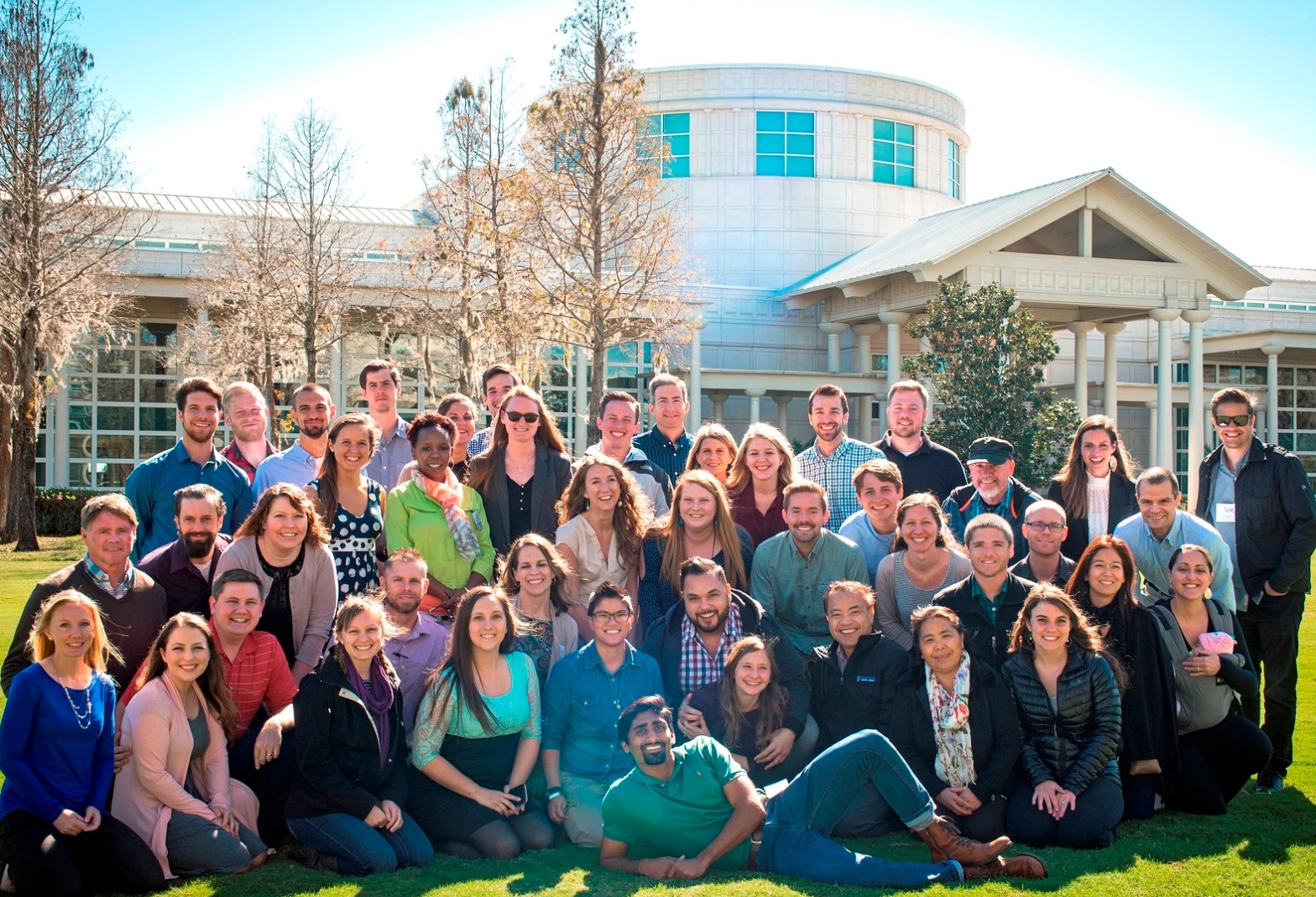
 To see pics of the Impact Conference and see Dirke teaching new Cru missionaries, click here: Changing Lives in Changing Times

December 2016
Read Lorna’s Academy update, Dirke’s Executive training, the Impact Conference & their Guardian Angel. Click here: December 2016
Reaching a New Generation
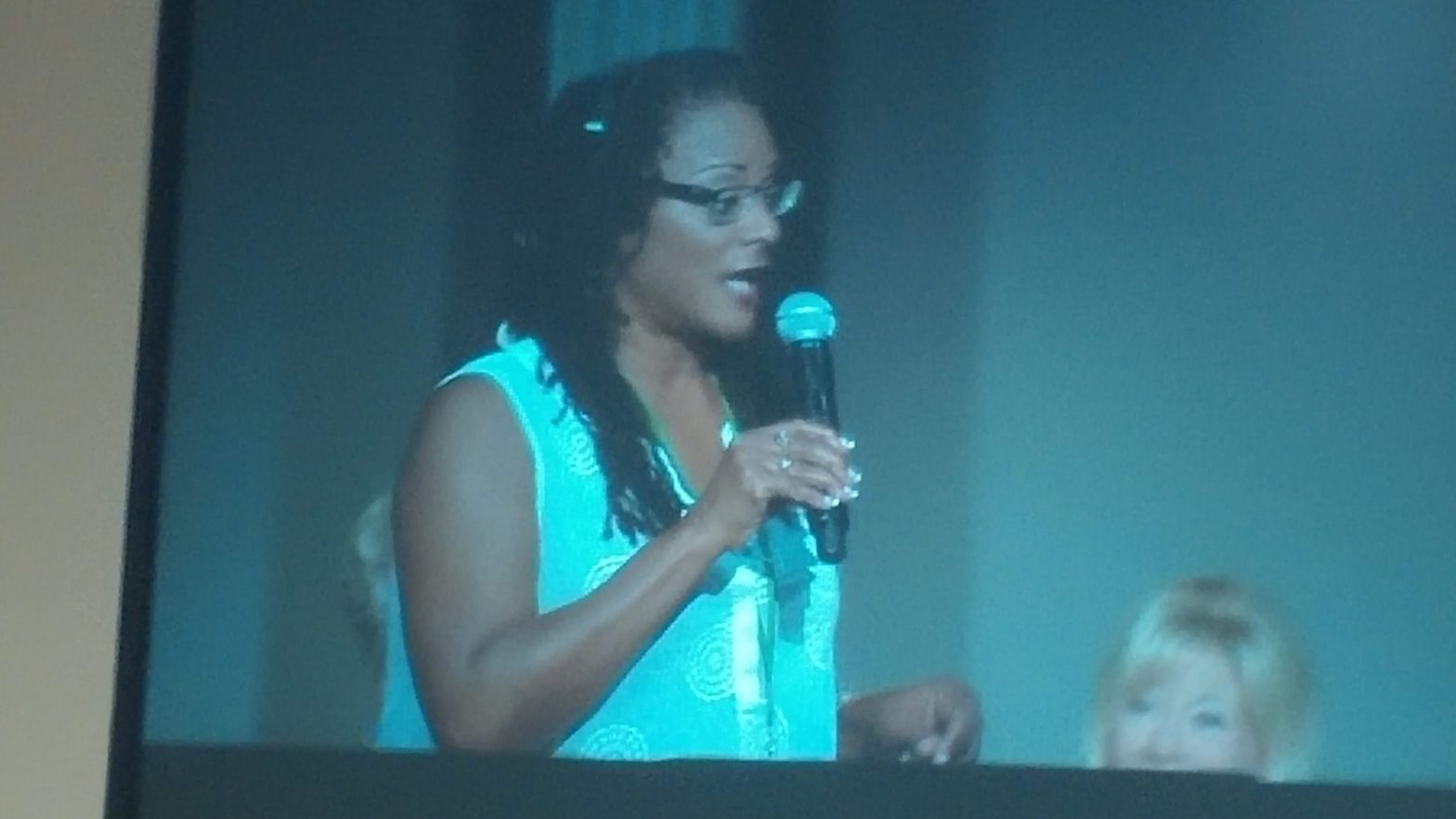
See H.S. outreach, a monument unveiled & hear of what God did this summer. Click here: reaching-a-new-generation
Connecting
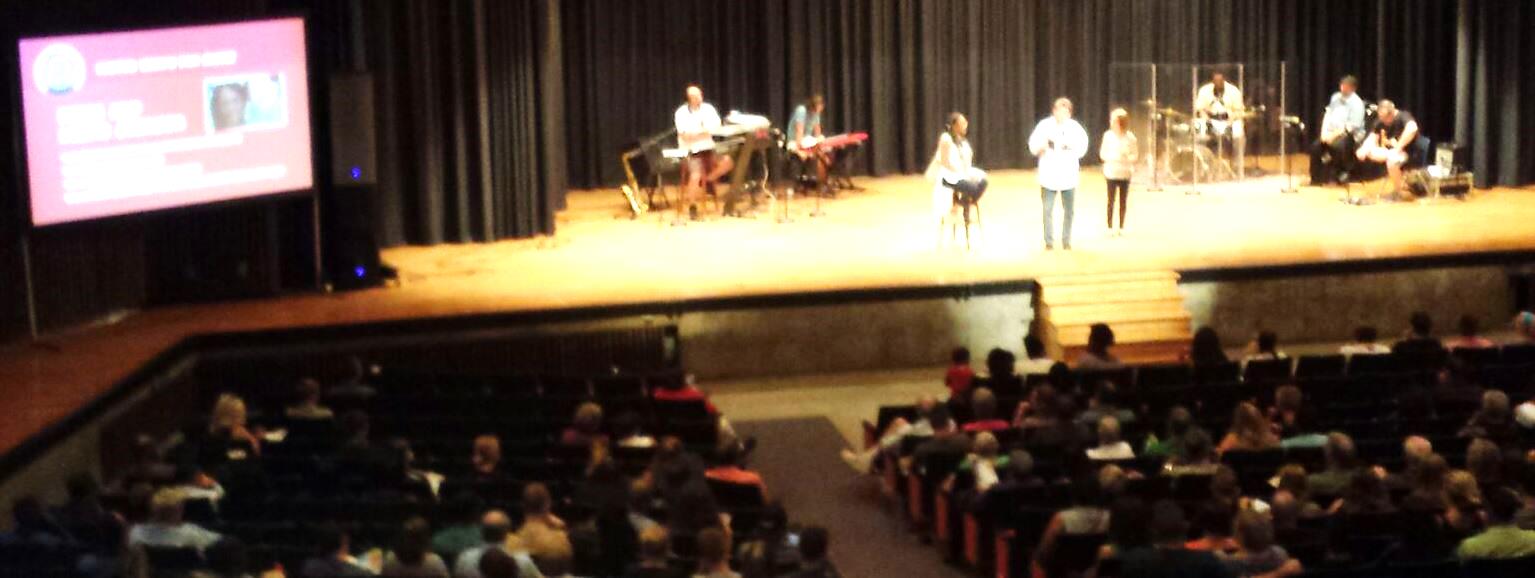
See summer speaking, fam pics and Lorna’s update on her Training Academy. Click here: Connecting Update
Lots Happened the Past 2 Months!

Equipping 200 new missionaries, grandbabies, our anniversary and an amazing discovery of Lorna’s family history, CLICK HERE: Lots n 2 Months
He Got Up

Ministering to 8,000 homeless, seeing Muslims come to Christ and more . . . click here: He Got Up
The Color of Flesh

Understanding Race, Color & Ethnicity
In first grade I had a pack of 16 crayons. I was happy, until I looked at Tracy and Susan. They each had a box. I just had a pack. They had 64 crayons. I had 16. Tracy reminded me daily of that fact. It even led to a fight on the playground. I’m not saying who won, but let’s just say, you could color Tracy, black and blue.
My nagging and begging worked. The night before my first day of 2nd grade my mother surprised me with a new box of crayons. Not just a box, but a box of 128 crayons. I thought I had died and gone to heaven. I couldn’t even sleep that night. “Take that Tracy!” Of course, Tracy and Susan also brought boxes of 128 crayons on that first day. So much for gloating, but at least I had now attained the upper level of crayon status in the 2nd grade world.
It was in the first few days of carefully examining all 128 crayons that I came across a crayon named, “flesh.” A few years later it would be renamed “peach,” but even as a 7 yr. old who was surrounded only by other “flesh” colored folk who looked just like me, something seemed askew. My initial thought was, “Awesome. I now have a crayon to use when I draw my stick-people” (as you can guess, I was artistically challenged). But my second thought, “Hold it, don’t we sing in church about all the people of the world, ‘Red, yellow, black and white, all are precious in His sight,’ isn’t their flesh a different color than this crayon?” But then, my third thought, “Hey, it’s time for lunch,” so, I didn’t think about it again. I didn’t have to think about it because it didn’t affect me. Everyone around me was “flesh” colored.
“Ethnocentric” means that one sees their own group or culture as the center or more important than surrounding groups or cultures. Someone who is ethnocentric sees themselves as the norm (or normal) compared to others who are peculiar or strange. Naming a crayon “flesh” with the color of one’s own personal skin is the epitome of ethnocentrism. Of course, there is nothing wrong with that unless someone of another flesh color shows up. And if there are only a few of those people, then we can view them as peculiar, not the norm. But when their numbers begin to increase, all of a sudden a very uncomfortable thought might cross someone’s mind. Maybe, they aren’t the peculiar ones, maybe I am.
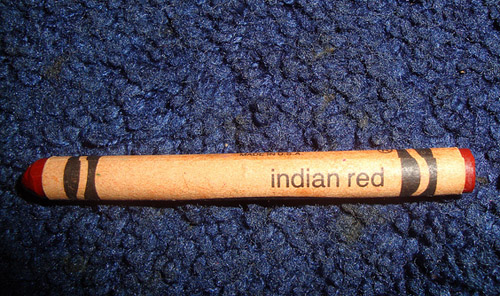 As the browning of America escalates, the peachy folks are decreasing in percentage and it’s harder to determine who the peculiar ones are. It is becoming more complicated to lump people according to crayon colors. And now we are finding out that the whole idea of biological races such as Mongoloid, Caucasoid or Negroid is just as false as the crayon color named “flesh.” So, how do we make sense of the meaning of Race, Ethnicity and Color? And does the Bible have anything to say about this?
RACE
Race is a socially defined group of people based on physical characteristics and facial features such as height, hair texture, eye and skin color. There are two aspects to race: physical and social. The social aspect is where group identity occurs. A group has to be recognizable by its own members. Usually that means there are certain physical characteristics that the group has chosen to identify with as well as other selected common characteristics.1 Although a Race is often socially defined by physical characteristics it is evident that there is no biological or genetic categorization of people. Quite simply, God did not make people into Race colors. He made them in His image. Therefore, what we call racial groups are really social groups, not biological groups. It is worth noting that the Bible does not speak of Race as we speak of it today, and seldom does it refer to skin color (it just wasn’t important). Ethnicity, however, is everywhere throughout the Scriptures. But before we address ethnicity, let’s look at Color, and see why linking skin color with the idea of Race has no biological validity.
COLOR
In 1994, the American Anthropological Association passed a resolution saying, “Differentiating species into biologically-defined races has proven meaningless and unscientific.”2 It has been found that the genetic variations within defined racial groups based on appearance are almost always greater than between racial groups.3 For example; the vast majority of men and women in Africa retain as much as ninety-three percent of the total variations of human species as in other parts of the world. Seventy-five percent of human beings are genetically exact.4 Therefore; biologists affirm what the Bible teaches: the only true racial category is “human.”
|
If this is the case, why does it seem like skin color has an association with socially defined groups of people that have been lumped into racial categories? Because, a group of people who geographically live together and function together socially, will, over time, biologically reproduce similar physical characteristics of their parents and extended family members. They will also adopt similar social and worldview perspectives creating their own unique culture. Culture could be defined as a body of behaviors, attitudes, thought patterns and practices that are shared by a particular group of people.
The skin tone variation can be explained by geographical and environmental factors over extended generations. Anthropologist, Nina Jablonski, Ph.D. attributes variations in human skin as adaptive traits that correlate closely to geography and the sun’s ultraviolet radiation, not race.
 Science has found a direct correlation between the geographic distribution of UV radiation (UVR) and the distribution of indigenous skin pigmentation around the world. Areas that have higher amounts of UVR generally are located closer to the equator and tend to have darker-skinned populations. Areas with lower UVR reflect lighter-skinned populations.5 The body’s skin color naturally adapts to protect itself from UVR. Researchers suggest that major skin pigmentation changes can take place in less than 100 generations (2,000 yrs.). Some speculate that human populations over the generations have changed from darker to lighter and vice versa as they have migrated to different UV zones.6
If skin color is darker closer to the equator, why wouldn’t Eskimos, Canadians or northern Japanese and Chinese be pale? During a Q & A discussion at the Science Museum of Minnesota, Dr. Jablonski explained, people in certain northern regions tend to have darker skin than one might expect because of three reasons. First, in the summer they still get high levels of UVR and in the winter their darker skin is needed to protect from reflected light from surface snow, ice and the water, if living near the ocean. The second reason she said is that darker skinned people don’t create as much Vitamin D. However, people whose diets are rich in Vitamin D (such as seal, walrus and fish) don’t need their bodies to create as much Vitamin D so there is not a physiological need for the body to create light skinned pigmentation. A third reason is that some northern climate regions have had migrations of people with darker skin who previously had been closer to the equator and there have not been enough generations for skin pigmentation to lighten.7
ETHNICITY
An ethnic group is a socially defined group of people who share a common heritage. They manifest their commonness through normative social behavior, work patterns, thought patterns, creative expressions and relational trends. Ethnic groups tend to be biologically self-perpetuating because of parentage that passes from generation to generation. Ethnicity is a subset of racial constructs. In the U.S. we can have Irish Americans, Jewish Americans, Italian Americans who all have similar skin tones but are ethnically different. In the same way we have Mexican Americans, who may look similar to other Latinos who have a Latin American heritage and yet their ethnic identity would be very different. Therefore, it is a false assumption to believe that you can identify an ethnic group only by physical features.
ETHNICITY IN THE BIBLE
The Bible speaks of ethnicity as a good thing. God’s promise to Abraham was that God’s people would be a blessing to all the nations. The Greek word for “nations” is “ethne,” (ethnic). The Septuagint (the Greek translation of O.T. Hebrew) affirms this same concept. “All peoples on earth will be blessed through you” (Gen.12:1-3). This blessing is repeated four times in Genesis emphasizing not only Israel’s role but the object of God’s blessing—all peoples (ethnic groups). In Gen. 18:18, 22:18 and 26:4 it is translated panta ta ethne (all the nations). This is the exact Greek wording in Matthew 28:19, “Make disciples of all the nations.”
In Acts 3:25 Peter quotes the Abrahamic promise and uses the Greek phrase pasai hai patriai which means “all the families,” or what is referred to today as a “people group” (ethnic group). It is clear from both the O.T. and N.T. that God’s blessing is not just a general blessing to all, but is specifically targeted to ethnic groups of people.
 After the fall, God instructed Noah (Gen. 9:1) and his sons to fulfill the original command given to Adam and Eve (Gen. 1:28) to “multiply and fill the earth.” The dispersion that comes out of the Tower of Babel (Gen.11) is in direct fulfillment to God’s instructions to fill the earth.
Dr. Albert Mohler, President of the Southern Baptist Theological seminary states, “The Apostle Paul clearly indicates that the dispersion of the nations was God’s plan all along, ‘And he made from one man, every nation of mankind to live on all the face of the earth, having determined allotted periods and the boundaries of their dwelling place’ (Acts 17:26). God’s sovereign plan from the beginning was to fill the earth with His image bearers.”8
The greatest affirmation that God values “ethne” (ethnic groups) is that they will continue for eternity. God’s desire for, and appreciation of diverse cultures and ethnicities, is seen in God’s intentional preservation of each ethne in the New City Jerusalem, our eternal heavenly home.
. . . for the glory of God gives it light, and its lamp is the Lamb. By its light will the nations [ethne] walk, and the kings of the earth will bring their glory into it, and its gates will never be shut by day—and there will be no night there. They will bring into it the glory and the honor of the nations [ethne]. – Rev. 22:23-26
Rev. 22:2b: “. . . The leaves of the tree were for the healing of the nations (ethne).”
All creation reflects God’s desire for diversity!
God loves ethnic diversity. Ethnic diversity is not the result of sin and rebellion but instead, reflects God’s original design of creation. “The creation of ethnicity originates with God’s directive to multiply and fill the earth in Genesis Two. This ethnic diversity is launched at the Tower of Babel and is reinforced at the day of Pentecost as the Holy Spirit ministers through each linguistic ethnic group and is consummated in Heaven and the New Creation through God’s retaining of diverse nations (ethne), tribes, tongues and people. Thus the multiplicity of culture/ethnicity fulfills a God designed purpose for His creation.
So take joy in the diversity of God’s creation. For every ethnic group reflects a facet of God’s image that cannot be seen without them. Oh, how I look forward to that day when we will all be together in that gigantic heavenly box of crayons in which our wrappers won’t say “flesh,” they will say, “One Spirit, My Spirit, says the Lord!”

Dirke Johnson has a doctorate in Church Leadership and is a professor for the Ministry Degree program at Palm Beach Atlantic University. He also teaches at Cru’s Institute of Biblical Studies and specializes in Leader Development, creating high performing teams. He has years of experience at ministering in urban cross-cultural and international contexts.
Endnotes
- John Farley, Majority-Minority Relations (Boston: Prentice Hall, 6th ed. 2010), pg.7
- David Wheeler, A Growing Number of Scientists Reject the Concept of Race. “Chronicle of Higher Education” (Feb 17, 1995), A8.
- Sally Lehrman, The Reality of Race, “Scientific American” (2003), pg. 288.
- Beverly Daniel Tatum, Can We Talk about Race? (Boston: Beacon Press, 2007), xiv.
- Webb, A.R., “Who, what, where, and when: influences on cutaneous vitamin D synthesis”.Progress in Biophysics and Molecular Biology (2006) 92 (1): 17–25.
- Jablonski, Nina G,.“Why Human Skin Comes in Colors” (PDF). AnthroNotes (Spring 2011). 32 (1).
- For more in-depth explanation of skin pigmentation related to UVR, Melanin and an individual’s genetic DNA, you can read “Human Skin Color” on Wikipedia (a free encyclopedia).
- R. Albert Mohler Jr., The Table of Nations, The Tower of Babel, and the Marriage Supper of the Lamb. An article adapted from his convocation address delivered on February 3, 2015.
4 Questions 4 Easter!

“It’s Easter and I have nothing to wear.” Ever said that? No, I can’t say I have, but, that comes as no surprise to my wife or anyone else who knows me. “Fashion consciousness” has never been one of my strengths. But I have heard that sentiment expressed many times during this time of year. Advertising during Easter season heats up as marketers play to that longing for the new.
Easter is when Christians celebrate the resurrection of Jesus from the dead. But for the rest of society it is better known as a time for new beginnings, ushering in the new spring season. There is freshness in the air as the winter season has ended. For many, it’s a time to buy a new outfit to create a new look. It is also a great time to take personal inventory, not just how we look externally, but evaluate how we are internally. I encourage you to reflect on these four questions during this Easter season as you look toward the season of new beginnings:

1. Who am I pleasing? (Am I focused on Christ?) 2 Cor 5:9-10 – I have one ambition to be pleasing to Him!
Am I conscious to live before an audience of One (God), or do I value what others think more?If we get it wrong here, everything else will be out of whack and flesh driven. Jesus says in John 14:6 that He is the way, the truth and the life. When I live self-focused it begins to look like . . .
-
My Way – It becomes my way or the highway. I become angry, resentful and manipulative because I’m driven to control life’s outcomes. I’m anxious and fearful when I become dependent upon others.
-
My Truth – I stop listening to the truth. I dismiss feedback. I revise history and rationalize past decisions. I’m unwilling to take responsibility for any hurt I may have contributed to in the past.
-
My Life – I become consumed with finding life in a position, a title or approval from others.
2. Where am I going? (Am I clear in my purpose for my life?)

-
Do I have a purpose statement for my life that incorporates my strengths, gifts and passions?
-
Am I assessing my progress and reflecting on my activities by plotting yearly goals in the physical, social and family aspects of life? Does my weekly schedule help me meet my yearly goals?
3. What am I lacking? (Am I continually learning?)
-
Do I seek out and welcome honest feedback?
-
Have I written down a personal development plan to help me better accomplish my life purpose?
-
Am I reading on topics that will help me learn and grow spiritually?
-
Do I seek out mentors formally and informally to learn personally and professionally?
4. When will I act? (Am I choosing to be Faith-Filled & Proactive?)

What you & I make of life will be entirely dependent upon our proactivity.
A family friend shared a story a number of years ago that was very impactful for one of our daughters. It brought home this point of proactive decision-making. She shared with our daughter, “I’m very careful of who I tell that I’m a virgin.” She then relayed a conversation with her co-worker who she had told she was a virgin and planning to remain one until she got married. Her co-worker was amazed and said, “Well, what if you never get married?”
Our family friend replied, “Then I’ll take my virginity to my grave.” The co-worker was incredulous, “How can you do that? You’re only human!”
“Exactly,” exclaimed our friend, “It is expressly because I am human that I can do it. If I was a dog, I wouldn’t be able to. It’s because I am human that I have the ability to choose. And I choose to remain a virgin until I’m married.”
It is a fact that we are all human and therefore, we can choose right from wrong, better from good, best from better. God is not holding me responsible for what has been done to me or opportunities not afforded me. But I am responsible for what I do with what has been done to me and opportunities afforded me. What proactive choices do I need to make as I enter this new Easter season?
So as the new spring season enters full bloom and you reflect on these four questions, you’ll need to excuse me cuz I need get to the mall. I had my eye on that sharp dress shirt and slack ensemble. Gotta look good, it’s Easter!
1. Who am I pleasing? [Centered on Christ]
2. Where am I going? [Clear in Purpose]
3. What am I lacking? [Continually Learning]
4. When will I act? [Choosing Faith-Filled Action]
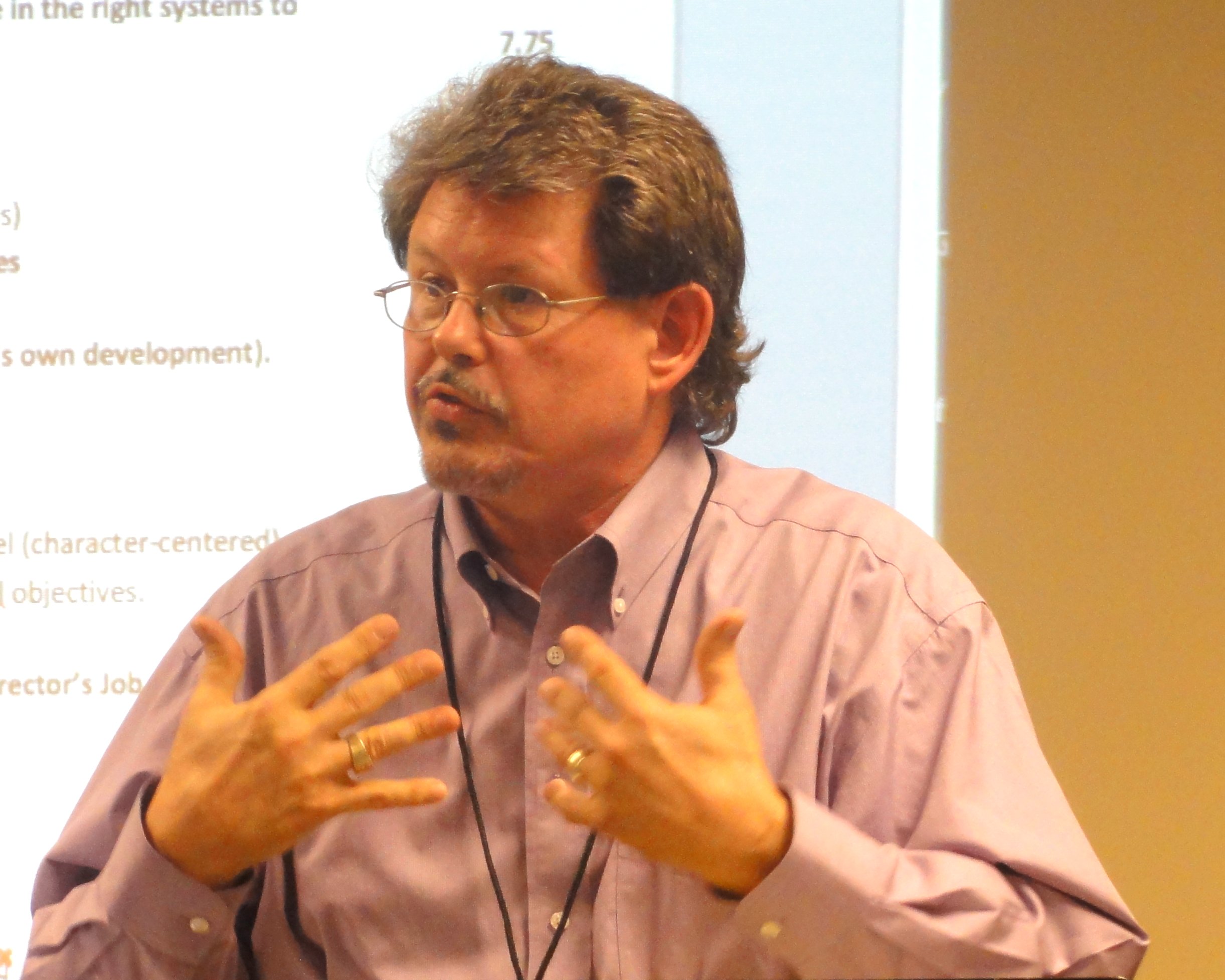
Dirke Johnson has a doctorate in Church Leadership and is a professor for the Ministry Degree program at Palm Beach Atlantic University. He also teaches at Cru’s Institute of Biblical Studies and specializes in Leader Development, creating high performing teams. He has years of experience at ministering in urban cross-cultural and international contexts.
Four Questions for Easter!

4 questions to consider during Easter & pics from Lorna’s ministry w/urban athletes & fam pics! Click here: 4 Questions 4 Easter!

