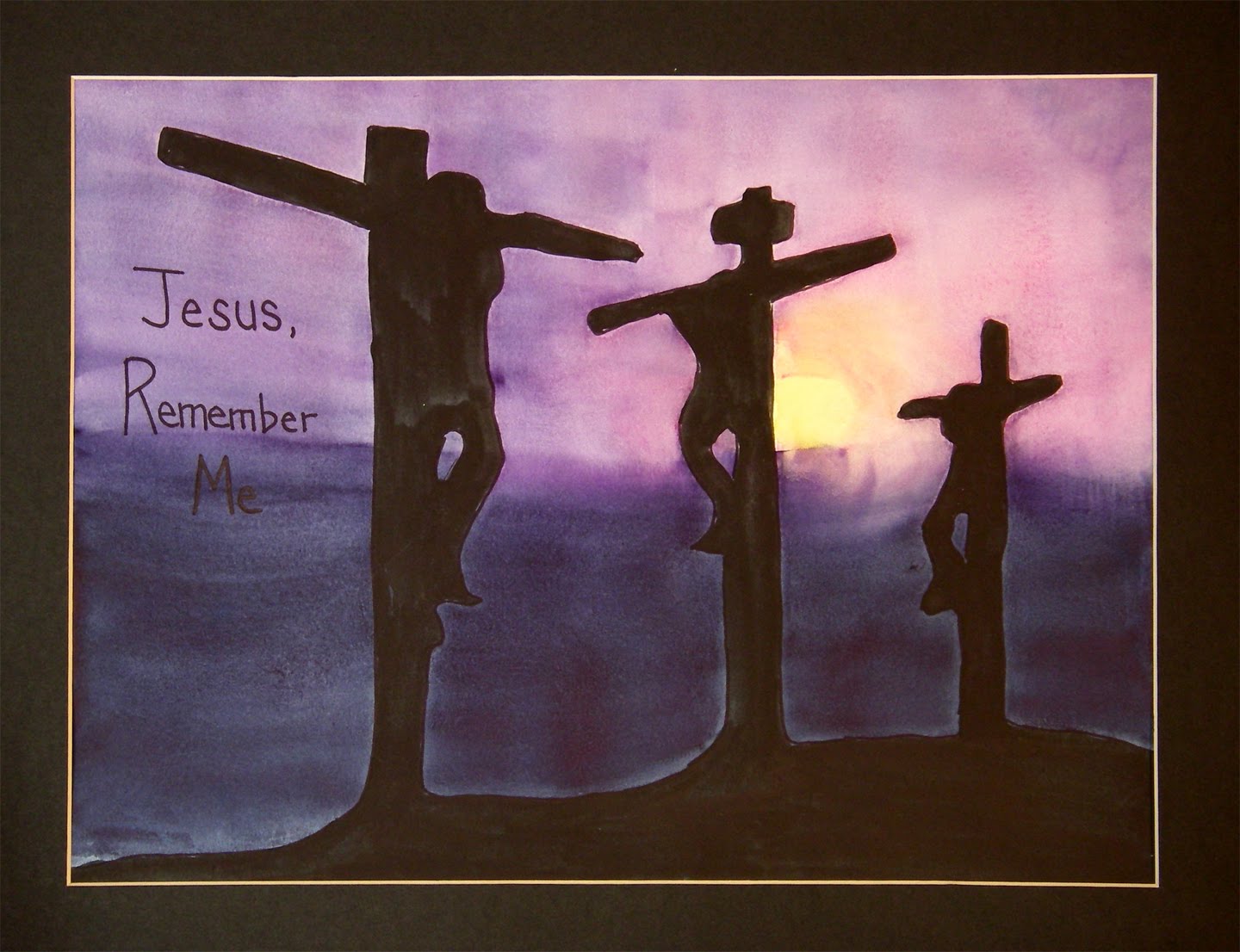
Which Thief Are You?

thief on cross 

One engages the heart of God and one does not!

And Jesus, turning to one of the thieves next to him on the cross said, “Truly, I say to you, today you shall be with me in Paradise.” – Luke 23:43

In this one statement, it has been considered by some the most surprising, suggestive and instructive incident in all the Gospels! From this one verse the concept of . . .

  • Purgatory is refuted – No waiting period to pay off sins.
  • Universalism is refuted – Not everyone goes to heaven, one thief does and one does not.
  • Soul sleep is refuted – Believers go into the presence of the Lord at death (Philippians 1:23)
  • Works salvation is refuted – Nothing is done to earn salvation by the thief who goes to Paradise.

But as important as each of those concepts are, there is something more practical that we can glean from this incident. Jesus was crucified between two thieves. In them we are shown two different effects the Cross elicits when confronted with the truth of Christ. One influences the heart of God and one does not. The German theologian Helmut Thielicke said, “He who has influence upon the heart of God rules the world.” So what is it that engages the heart of God?

Matthew writes in his gospel about the same incident but suggests that initially both thieves were saying derogatory statements against Christ, but after hearing Jesus pray for their forgiveness of sins & how he responds to suffering, there is a change of heart in one of the thieves. Jesus says to him in verse 43: “Truly, I say to you, today, you will be with me in paradise.”

The thief with a hardened heart wants immediate deliverance. In verse 39 he says to Jesus, “Are you not the Christ? Save yourself and us!”

  • He didn’t believe Jesus could give salvation, he wanted it, but not coupled with belief.
  • He wanted salvation for himself, but without having to change.
  • He conveys an attitude towards Jesus of: (1) What have you done for me? (2) Do what I want. (3) Serve me! It’s an attitude of self-centeredness, hard-heartedness with no acknowledgement of brokenness or humility.

Neither you, nor I, will ever engage the heart of God without belief (faith) and dependence upon God that carries beyond my capacity to control my life situations and outcomes.

The thief with a true sense of brokenness and humility responds to the hard-hearted thief in v. 40-41:

But the other rebuked him, saying, “Do you not fear God, since you are under the same sentence of condemnation? And we indeed justly, for we are receiving the due reward of our deeds; but this man has done nothing wrong.” 

Notice the words by the thief with belief:

  • “we indeed justly . . . deserve” – True confession of sin means I agree with God that my sin is displeasing .
  • “Do you not even fear God?” – He recognizes he is accountable to God for how he has lived his life.
  • “has done no wrong.” – He implies that Jesus is who He says He is, the Messiah, the holy one without sin!

 The thief continues in v.42, And he said, “Jesus, remember me when you come into your kingdom.”

  • His faith exceeds and preceeds the apostles – He acknowledges that Jesus will usher in a spiritual Kingdom!
  • “Remember me” – He doesn’t ask Jesus, what can you give me but he places himself at the mercy of God! He demonstrates Christ-dependence and not self-dependence.

 And the Heart of God responds in v. 43 when Jesus promises him more than he asks for and sooner than he expected!   And he said to him, “Truly, I say to you, today you will be with me in Paradise.”

Both thieves would have liked immediate deliverance but only one received it! One had a hard heart; the other a soft heart. One was self-focused; the other was Christ-focused. And only one engaged the Heart of God!

I may have put my faith in Christ and know Heaven is my destiny but it doesn’t mean I’m engaging the heart of God in my life at the moment. There are times that my life looks more like the hard-hearted thief rather than the soft-hearted thief. How about you? Which thief reflects your heart before God today? Can you trust God for your future? For the predicament you find yourself in right now? Can you trust God without knowing the outcome, even if it might not end as you would hope?

If you do, then you will engage the heart of God and He may not give you what you want but He will give you more than you ask and sooner than you expect!

XSL 2012 Dirke speaking to Exec DirectorsDirke Johnson has a doctorate in Church Leadership and is a professor for the Ministry Degree program at Palm Beach Atlantic University. He also teaches at Cru’s Institute of Biblical Studies and specializes in Leader Development, creating high performing teams. He has years of experience at ministering in urban cross-cultural and international contexts.

God’s Waiting Room

 I do not wait well.  I don’t like red lights; I don’t like slow cars in front of me. I don’t even like sitting still. When I left home for the first time and moved into my dorm room in college it was excruciatingly difficult until I brought my rocker from home. I especially don’t like waiting for doctors. You walk in and wait to see the receptionist and then you sit back down (in the waiting room) and wait to hear a nurse call your name only to take you to a small room where you “wait” for the doctor to come. And then once he gives the diagnosis he says, “Wait here and the nurse will come and give you your prescription.” And so I wait . . . and wait . . . I swear they’re standing outside the room laughing and looking at their watch saying, “How long can we make this sucker wait.”

Sometimes it feels that way with God. David says in Psalms 37:7, “Rest in the Lord and wait patiently for Him.” I’m not sure I’ve ever waited patiently for anything in my life. But I have found my impatience can get me in trouble and can create a lot of unnecessary stress which only increases my doctor visits. This thought struck me in a new way as I was studying the story of Jesus feeding the five thousand.

My pastor of many years ago made the interesting comment that he thought the greatest miracle in the story wasn’t Jesus supernaturally multiplying the fish and the loaves but it was the people who sat down patiently waiting for the food that wasn’t there. He had in mind the impatient church folk who fight to get to the head of the lines for the after-service church dinners. The disciples could tell that the people were tired and hungry, notice their comments: “the hour is late. Send them away [to] . . . buy themselves something to eat.”  Mark 6:35-44:

 35 When it grew late, his disciples came to him and said, “This is a desolate place, and the hour is now late36 Send them away to go into the surrounding countryside and villages and buy themselves something to eat.” 
37 But he answered them, “You give them something to eat.” And they said to him, “Shall we go and buy two hundred denarii worth of bread and give it to them to eat?” 
38 And he said to them, “How many loaves do you have? Go and see.” And when they had found out, they said, “Five, and two fish.” 39 Then he commanded them all to sit down in groups on the green grass. 40 So they sat down in groups, by hundreds and by fifties.41 And taking the five loaves and the two fish he looked up to heaven and said a blessing and broke the loaves and gave them to the disciples to set before the people. And he divided the two fish among them all.42 And they all ate and were satisfied. .
43 And they took up twelve baskets full of broken pieces and of the fish. 44 And those who ate the loaves were five thousand men.

God provides and He provides abundantly, if I wait for Him. I’m sure there were people who were in the crowd who had gotten hungry and who had left to go get some fast food (Bagels to go) or whatever Israel’s equivalent might have been. But in their attempt to satisfy their legitimate needs, through the normal expected means, they not only missed an amazing miracle but they likely missed out on an amazing meal.

What are you impatiently waiting for? Where are you inclined to take matters into your own hands? There seems to me to be a fine line between waiting patiently in the Lord and taking proactive steps of faith. I’m not sure I distinguish them well. But at its core, whether it is an intentional wait—in faith—or, if its take action—in faith, either way, it must reflect a dependence upon God for the solution (whatever it may be) without a manipulative attempt at my own pre-determined solution to the problem. I don’t want to presumptively act like Abraham did to produce an Ishmael unnecessarily. But I also don’t want to passively sit on my hands and fail to act. I want to be like Nehemiah was when he learned of the condition of walls in Jerusalem. But even Nehemiah waited in prayer and never took action until the king made a way for him. And Nehemiah took that opportunity as from the Lord.

Lord, help me recognize my own desired pre-determined solutions and help me truly seek your perfect will for I know YOUR solutions will satisfy more fully! So Lord, help me be patient to wait for your hand of opportunity, but Lord, could you do it a little faster!

XSL 2012 Dirke speaking to Exec DirectorsDirke Johnson has a doctorate in Church Leadership and is a professor for the Ministry Degree program at Palm Beach Atlantic University. He also teaches at Cru’s Institute of Biblical Studies and specializes in Leader Development, creating high performing teams. He has years of experience at ministering in urban cross-cultural and international contexts.

The Biblical Root of Racism

root

The Biblical Root of Racism

Racist! Few labels are hurled in today’s rhetoric that packs such a combative punch. The knee-jerk reaction to the charge of racism is immediate denial. No one wants to admit to racism. It has become viewed as one of society’s most evil sins. And for this reason I have found it counterproductive to ever use the word as a label, even if it might be true. In fact, I’m going to make the radical suggestion that as Christ followers we opt for a biblical term that strikes more at the root of the problem.  I hope to show how this root of racism can affect us in two ways: (1) The attitude in which we confront biblically those who practice racism and (2) The knowledge of how the root of racism affects us all.

Racism is real

The existence of racism is real and ugly, whether it’s expressed in a personal encounter or as a structural societal reality. In whatever form it is manifested it is evil because it devalues, demeans and strikes at the core of a person’s personal worth and identity. An identity created in the image of God.

Though the Bible doesn’t use the term “racism” as we use it in America, the effects are everywhere. We see the intentional and systematic degradation and oppression of one people group over another group beginning in the first book of Genesis. And by the time Jesus appears in the flesh the Jews were subjugated under Roman rule and were deemed “less than” by their oppressors. The Samaritans of Jesus day had become their own people group expressly because of the Assyrian domination foisted on them 700 years earlier when they had to intermarry and adopt the Assyrian culture. The Jews looked down on the Samaritans. But Jesus never addressed racism in the same way we speak of it today. Neither did the disciples or any of the biblical writers. They certainly had plenty of examples to point to and had personally experienced a degree of racism themselves. But the charge of racism never appears.

As a white male who is part of the dominant culture in America, I have the privilege of taking advantage of my whiteness without even being aware of it. I may never have become aware of my white privilege had I not married an African American woman, raised three beautiful daughters who identified with the black community and was an associate minister at a predominantly black church, living in the inner city of both Detroit and Minneapolis.

I know what it is like to enter a restaurant and wait to be seated only to have to leave because of the color of the one standing next to me. I know what it’s like on numerous occasions to have my wife attempt to write a check and be turned down, only to approach the same clerk a few minutes later (not knowing that we were married) and to accept my check which also had her name on it. I have seen my wife followed in stores merely because of the color of her skin. On separate occasions my wife and children while driving have been randomly stopped by police hoping to find an illegal substance for an arrest. My daughter, while parked with her African American male friend outside our house had a policeman knock on her passenger window telling her she needed to leave and go home (not because it was a bad part of town, but because he thought it was too good for her). When she told him that this was her home the officer said she was lying. With great pleasure she got out of the car, took the keys from her purse and waving bye to her friend and the officer, she entered our home. This is just the tip of the iceberg of personal experiences. So racism is not an abstract construct. It is not an excuse for those with a victim-mentality. And yet, if we settle for racism as the culprit we will miss the real enemy.

What is racism?

What creates tension and makes racism charges so volatile and confusing is that racism is often defined differently.  The majority of racism definitions agree that racism is prejudice and discrimination fueled by perceived biological differences that rank groups of people as either superior or inferior. However, there are several variations. Some definitions only include intentional forms of discrimination based on race, ethnicity or nationality.1 Others include any behavior or belief based on cultural stereotypes.2  One view defines racism as prejudice plus power while another view says if the culprit is in a perceived subordinated power position, racism cannot be leveled.[3][4] Another says if discrimination occurs without malicious intent one is not committing racism.  And so goes the semantic tug-of-war: “Yes you are.” “Oh no I’m not.”  

The biblical writers do not play that game. In fact, we do not see them leveling any charges that sound like our isms and phobia’s of the day: chauvinism, sexism, ageism, anti-Semitism, homophobia, Islamophobia, you name it the Bible will not minimize the root issue with surface labels.

The root

The deficiency in using the label “racism” and all the isms is that they are too shallow and too simplistic. Each label is symptomatic of a much deeper root problem. Our definitions of racism can be selectively chosen to point out the offenses of others and yet protect ourselves from personal guilt. I find an eerily similar attempt by the lawyer who approached Jesus in Luke 10:25 when he asked, “Teacher, what shall I do to inherit eternal life?” Jesus counters, “What is written in the Law? How does it read?” The Lawyer correctly answers, “You shall love the Lord your God with all your heart . . . soul . . . strength . . . mind and your neighbor as yourself.” But the lawyer’s next words reveal his true heart.

The gospel writer, Luke, discloses his motive, “Desiring to justify himself,” the lawyer asks, “Who is my neighbor?” But Jesus chooses not to give a definition that can be easily slid around. He describes in parable form the behavior of what love looks like to a neighbor. And rather than the Jewish priest or Levite, it is the Samaritan that shows extraordinary kindness and even the lawyer admits that the Samaritan is the real neighbor.  Jesus point was that our neighbors are whoever we come in contact with whether we think they deserve it or not—in other words, everybody!

The lawyer’s attempt to justify himself reveals more than a misunderstanding of “loving your neighbor.” It exposes a heart that chooses to judge who is worthy of love and who is not. But God has not given us that prerogative. God has tied our love for Him to how we love our neighbor. And just as we cannot choose to love “some” of God, we cannot choose to love “some” of our neighbors. This is why Jesus commands us to love our enemies (Luke 6:27)—which may include those we deem racist.  But if I am honest, I am the lawyer and you likely are too! Everything within me cries out to justify myself. I want to redefine what love should be to those who are my enemies. I want to redefine who my neighbor is. I want to redefine what is and is not racism. But racism and all the isms are merely symptoms and not the root. They are fruits of sin but not the root of my sin.  In my heart of hearts is a natural draw to self-righteousness. And this self-righteous attitude, though often undetected by the natural eye is at times undetected because of my own hard-heartedness.

The selective judging practiced by the lawyer is what is referred to in the book of James as breaking the royal law. The word James uses to describe this root sin is partiality. It is to pre-judge (prejudice) and to show favor based on external distinctions. Some translations call it being a respecter of persons. It is discriminating or positioning one person or a group of people in a more favorable status than another group. And such a transgression is no light offense. Read what James says:

If you really fulfill the royal law according to the Scripture, “You shall love your neighbor as yourself,” you are doing well. But if you show partiality, you are committing sin and are convicted by the law as transgressors. For whoever keeps the whole law but fails in one point has become accountable for all of it. . .  So speak and so act as those who are to be judged under the law of liberty. For judgment is without mercy to one who has shown no mercy. Mercy triumphs over judgment. (James 2:8-13 ESV)

I like how the Expositor’s Bible Commentary puts it. “The commandment to love one’s neighbor is called the “royal law” because it is the supreme law to which all other laws governing human relationships are subordinate. It is the summation of all such laws. The one who keeps this supreme law is doing right. The right course of action is contrasted to v.9 where partiality is identified as committing sin. Therefore, the right course of action is to show favor to everyone.5

We as Christ followers are to show favor to everyone because we have received God’s grace (God’s unmerited favor). So we who receive such favor are expected to speak and act by dispensing to others the same favor we have so freely received. This is what James calls operating under the Law of Liberty. This is also described by the Apostle Paul in Galatians 5:13:

“For you were called to freedom, brothers, only do not use your freedom as an opportunity for the flesh, but through love serve one another. For the whole law is fulfilled in one word: You shall love your neighbor as yourself.

To show partiality is to be a respecter of persons by putting one type of person or group over another and it violates the Law of Liberty. It is a form of playing God by making ourselves a judge. The danger is if we function as judges of others, then God will use the same measurement of judgment on us. James says judgment is without mercy. I don’t know about you, but its mercy that I need and mercy is what others need, even those who are committing racism (partiality).

Attitude to confront

Whether I have committed racism or not, could be argued by what definition one uses. But what cannot be argued is if I have shown partiality. Whether it is thinking of myself as “better-than” or behaving in such a way that reflects I am a respecter of persons regarding social status, political associations, station in life, religion, denominational affiliation, personality differences or affinity associations, then I have committed partiality and most likely you have too. Knowing this, we confront our brothers and sisters when they transgress the royal law—humbly—with full awareness of our own self-righteous, partial nature.

The Apostle Paul says we are to restore in a spirit of gentleness. (Gal. 6:1)  That gentle spirit begins when we first recognize and admit that we have committed partiality ourselves. We do not stand in judgment over the transgressor. We stand with them as a fellow brother or sister to bear with them (Gal. 6:2). I cannot correct with gentleness unless I have recognized that I am in as great of need of God’s grace and mercy as the one I hope to correct.

Yes, God wants us to speak up and address ethnic/racial inequities and injustices. And there are times and places where public protests and demonstrations are warranted. It’s worth noting that the effectiveness of the Civil Rights Movement in the 60’s was not only tied to their non-violent approach but also to their intentionality to expose the “partiality” of rights and privileges granted to the dominant culture at the expense of African Americans who were denied the same privileges.

So when we speak up, let us speak with gentleness, recognizing our own self-righteous tendencies. And rather than level the racist charge, sensitively and compassionately help others see where “partiality” is being practiced. God’s judgment will be more effective than any labels we can throw at people. So let’s do all we can to compassionately correct. For mercy triumphs over judgment! And oh, how I so need God’s mercy and I bet you do too.



XSL 2012 Dirke speaking to Exec DirectorsDirke Johnson has a doctorate in Church Leadership and is a professor for the Ministry Degree program at Palm Beach Atlantic University. He also teaches at Cru’s Institute of Biblical Studies and specializes in Leader Development, creating high performing teams. He has years of experience at ministering in urban cross-cultural and international contexts.

Endnotes

1     Reilly, Kevin; Kaufman, Stephen; Bodino, Angela (2003).Racism : a global reader. Armonk, N.Y: M.E. Sharpe. pp. 15–16. ISBN 978-0-7656-1060-7

2  “Racism” in R. Schaefer. 2008 Encyclopedia of Race, Ethnicity and Society. SAGE. p. 1113

 Operario, Don and Susan T. Fiske (1998). Racism equals power plus prejudice: A social psychological equation for racial oppression. Pp. 33-53 in Jennifer Lynn Eberhardt and Susan T Fiske (eds), Confronting racism: The problem and the response. Thousand Oaks, CA, US: Sage Publications, Inc.

4http://epress.lib.uts.edu.au/journals/index.php/mcs/article/view/1075/160Only White People can be Racist”: What does Power have to with Prejudice? Pooja Sawrikar and Ilan Katz

 The Expositors Bible Commentary (vol. 12), “James.” Pp. 179-180 commentary by Donald W. Burdick. (Grand Rapids, MI: Zondervan, 1981).

      

Dirke’s blog: Going from RESOLUTION to Godly RESOLVE?

What Does It Take To Stop You?

New Year’s resolutions roll off lips with ease this time of year. A few months later they are long forgotten. What has God’s Spirit prompted you to do this coming year? Your faith is measured more by what it takes to stop you rather than what you attempt. Luke says Jesus “Set His face” for His final journey to Jerusalem. Jesus knew what God had for Him (the Cross and the resurrection) and he was not to be denied.

When the days drew near for him to be taken up, he set his face [Godly resolve] to go to Jerusalem. And he sent messengers ahead of him, who went and entered a village of the Samaritans, to make preparations for him. But the people did not receive him, because his face was set toward Jerusalem. And when his disciples James and John saw it, they said, “Lord, do you want us to tell fire to come down from heaven and consume them?” But he turned and rebuked them. And they went on to another village. (Luke 9:51-56 ESV)

The intentions were right, the plans were made but Jesus’ journey was not without a setback. He and his disciples attempted to stay in a village but were not permitted (v.53). The disciples wanted Jesus to retaliate (v.54). Rather than rebuking those who did not receive Him, Jesus rebuked his disciples (v.55). He admonished their lack of perspective. They let their feelings affect their response. Jesus demonstrated what our response must be when we encounter obstacles. “They went on to another village (v.56).” We do not let frustrations or hurts at the hands of others keep us from moving forward to accomplish what God has put before us. Good intentions die unless executed. Set your face to do what God has called you to do, expect obstacles, don’t stop. Go to another village!


Dirke has his doctorate in Church Leadership and is a professor for the Ministry Degree program at Palm Beach Atlantic University. He also teaches at Cru’s Institute of Biblical Studies. He specializes in Leader Development,  creating high performing teams and has years of experience at ministering in urban cross-cultural and international contexts.

Dirke’s blog: Why Wait till Christmas?

She was sitting in the doorway to the mall.  I just assumed she was about to ask me for money… just like most of the tattered dressed, ashy faced, too much drama for TV people I saw begging ‘round there all the time.  I expected a story about how she needed money for the bus or. . .

 (Spoken Word is a rhythmic expression mixing poetry and prose. This is not written for grammar purposes but for oral presentation). Written & presented by my daughter, Danelle at the Minneapolis Gospel Sounds, Holiday Concert

 WHY WAIT TILL CHRISTMAS?

She was sitting in the doorway to the mall.  I just assumed she was about to ask me for money… just like most of the tattered dressed, ashy faced, too much drama for TV people I saw begging ‘round there all the time.  I expected a story about how she needed money for the bus or food for her four kids at home because daddy just got locked up, she was about to be evicted and all she needed was my $4.97 to help her out. So I looked in my pocket for a couple of ones ‘cuz I thought I just broke that 50… see, she was lucky, I was in the Christmas spirit.  It only comes around once a year and you have to take advantage of the Christmas cheer.  Peace, love, and goodwill… Still, as I prepared to hand her over a couple of ones and a coupon for a free can of soup… I was surprised how she looked at me.

There were no smiles, no joy, her demeanor held sadness heavy in her eyes, peaceful, but pained by more of the world than I cared to know. She surrendered a spirit of sincerity…So I put the ones back in my pocket and offered her a 20. She reached for my hand and closed it… didn’t take the money.  She held my stare and said, “Why wait for Christmas, when I ask for you every day?” About to tell her this was the first time we’d ever met… but I started to understand what she meant.

Christmas trees, Nativity scenes and Christmas caroling; A season for everything lovely. This is the time for charity and giving.  Toys for Tots drive, homeless shelters sing songs next to Salvation Army’s ring bells to the tunes of our generous donations because it’s Christmas time and the tax returns are right around the corner. Cornerstone charities collect coat bundles and food baskets for needy children as if their greatest needs only come once a year.

This is the time where our homes are filled with love, our disagreements are put on hold because it’s not about ourselves during Christmas—it’s about others, it’s about giving, it’s about a Love so great it lived for us, died for us, and lives for us again.  But it takes too much to live like this more than once a year.  So our celebration waits for Christmas—to renew our spirits, to love, to give, to cherish.

The woman let go of my hand and stood to leave.  And as she left it wasn’t her voice that would speak and repeat…“Why wait for Christmas when I ask for you, when I call for you every day?—when my blessings are abundant…when my grace is overflowing… and when my love is everlasting.  What if I waited for Christmas?” But I pleaded with the Lord… “I didn’t hear you calling me.  When did you ask for me?” And the Lord replied, “I tell you the truth… whatever you did not do, for one of the least of these, you did not do for me.” Matthew 25:45


Dirke’s blog – Thanksgiving reveals our proximity to Jesus!

You’re visiting at Auntie’s home. She gives your child a treat. What do you say? Every parent knows the routine. “What do you tell Auntie, honey?” We work hard at trying to get our children to understand the importance of saying, “Thank You.” We all too often know the feeling of doing something for someone and never hearing those special two words in return.

How many times have we prayed for God to come through in a given situation and, after He did, we fail to offer up a single word of thanks? We need to put as much emphasis into thanking God for what He has done as we put into pleading with God when we are in need.

Several years ago our family devotional time at Thanksgiving focused on the parable of the ten lepers that were healed in Luke 17:11-19.  After Jesus healed the ten, only one came back to Christ and fell at his feet to give thanks.  Our Lord then said, “Where are the other nine?”

 11  On the way to Jerusalem he was passing along between Samaria and Galilee. 12 And as he entered a village, he was met by ten lepers, who stood at a distance 13 and lifted up their voices, saying, “Jesus, Master, have mercy on us.” 14 When he saw them he said to them, “Go and show yourselves to the priests.” And as they went they were cleansed. 15 Then one of them, when he saw that he was healed, turned back, praising God with a loud voice;16 and he fell on his face at Jesus’ feet, giving him thanks. Now he was a Samaritan. 17 Then Jesus answered, “Were not ten cleansed? Where are the nine? 18 Was no one found to return and give praise to God except this foreigner?” 19 And he said to him, “Rise and go your way; your faith has made you well.”

We discussed as a family how often we pray and ask God for things but seldom demonstrate a spirit of gratitude and thanks with the same intensity that we come before the Lord with our original request. A lack of thanksgiving exposes our hidden thoughts that God is somehow obligated to meet our wants. He’s our own personal bellboy in the sky.

Luke states that the ten lepers asked Christ from a distance.  Once healed, they received no more blessing!  The one who returned thanks was the only one to experience the closeness of Christ. Jesus announced, “Your faith has made you well.”  The “wellness” Jesus spoke of was beyond the original request.  Jesus addresses the deeper inner need that this former leper didn’t even realize he had. The other nine missed out. The one that returned experienced internal cleansing and a spiritual closeness to the Savior.

An attitude of thanksgiving is not just a perfunctory “thank you.” They are words from a heart that falls at the feet of Jesus and draws one into a spiritual inner awareness of their dependence upon Him. My prayer for us this Thanksgiving is that we express a real thanksgiving that draws us close to the One who has blessed us beyond whatever we could dream of or hope for.

 “In everything give thanks for this is God’s will for you in Christ Jesus.” – I Thessalonians 5:18

Dirke has his doctorate in Church Leadership and is a professor for the Ministry Degree program at Palm Beach Atlantic University. He also teaches at Cru’s Institute of Biblical Studies. He specializes in Leader Development,  creating high performing teams and has years of experience at ministering in urban cross-cultural and international contexts.
Dirke’s Blog – An Amazing Divine Encounter

Have you ever had those seemingly random encounters with a stranger where God opens up an unexpected conversation and uses you to minister and encourage someone in the Lord? I sure have. Whether it’s entering into a discussion with someone sitting next to me in an airplane, or at a coffee shop, you never know what God has in-store.

Recently I was handling routine business with our bank manager when one comment led to another and before you knew it, I was doing marriage counseling and praying with the branch  manager. Two days later I received a letter thanking me for my timely words and prayer. Last night I received a phone call from a landlord who was inquiring about renting to someone who had stayed in our home. The conversation moved to sharing her fears and past hurts. God led me to share from the Bible and to pray with her. The next day I received a follow up e-mail thanking me for my prayer & words of comfort. I wish I could say I experience these moments more often, but it made me think of a divine appointment I had in 2010 that tops my list.

An Amazing Divine ENCOUNTER

Luis worked for a Restoration company and because we had water damage, he had been working in our home for nearly two weeks. On the last day, he cautiously approached me and said, “I see from the pictures on your wall that you have a beautiful family and I know that you are a minister, is it okay if I ask you a question?” I put down what I was doing and said, “Sure.” With a pained but inquisitive expression Luis asked, “Is it normal to have second thoughts before getting married?

One discussion led to another. His fiancé from Boston came down the next month and Lorna and I counseled them. It became apparent that marriage wasn’t wise. I helped Luis through the break-up and soon after he asked if I would disciple him. We began to meet regularly for a year walking through the Scriptures and reading a book on practicing spiritual disciplines for spiritual growth. During this time, Luis shared his story . . .

Luis’ amazing spiritual journey began in prison where he was given a 10 year sentence for dealing drugs. Shortly after arriving he found a Bible with the front cover torn off and a few pages missing. He began reading and attending the prison chapel. He met several men who began to help him better understand what he was reading and told him when he was ready, to pray the prayer of salvation. In June 2006, Luis became a Christian. His sentence was reduced to two years. Luis now wanted to please God, not only from his heart but with his body. Shortly before going into prison he weighed 281 lbs. When he was released, he had become a buff 195 lbs. His old neighborhood didn’t recognize him. Luis decided to come to Orlando, FL to work in his brother’s Restoration Company which led to our encounter.

But the story becomes even more amazing. After a year of our meeting, Luis sensed the Lord wanted him to attend a Bible college in Oklahoma. During his first year he meets Latoya, and they become engaged. As Luis is sharing with LaToya he happens to mention my name. To Luis’ surprise, LaToya says, “Dirke? Dirke & Lorna?  I know them.” Latoya had been a student with the Impact Movement at Ohio University. While attending a conference in 2002 that Lorna & I spoke at, she rededicated her life to Christ and credits her Impact experience as being a major factor in her decision to go to Bible College & enter the ministry.

Luis is finishing his last year in Bible college and they just had their first child. Only God arranges these encounters. So be ready, God has divine appointments planned for you!


Dirke has his doctorate in Church Leadership and is a professor for the Ministry Degree program at Palm Beach Atlantic University. He also teaches at Cru’s Institute of Biblical Studies. He specializes in Leader Development,  creating high performing teams and has years of experience at ministering in urban cross-cultural and international contexts.